Class 3–5Class 6–8Class 9–10
Baking soda + vinegar
Vinegar and baking soda make a new gas called carbon dioxide. That gas makes all the bubbles!
The acid in vinegar reacts with sodium hydrogen carbonate and releases carbon dioxide gas, which bubbles out as fizz.
NaHCO₃ + CH₃COOH → CH₃COONa + H₂O + CO₂NaHCO₃(s) + CH₃COOH(aq) → CH₃COONa(aq) + H₂O(l) + CO₂(g)
baking soda + vinegar → sodium acetate + water + carbon dioxide
Why?
The H⁺ from acetic acid turns HCO₃⁻ into carbonic acid, which breaks into water and CO₂ gas.
College
One mole of NaHCO₃ (84 g) gives one mole of CO₂, about 24 L at room temperature. The reaction is endothermic, so the flask feels colder.
n(CO₂) = n(NaHCO₃) = m / 84 g·mol⁻¹
V(CO₂) ≈ n × 24 L·mol⁻¹ (20 °C)
▶
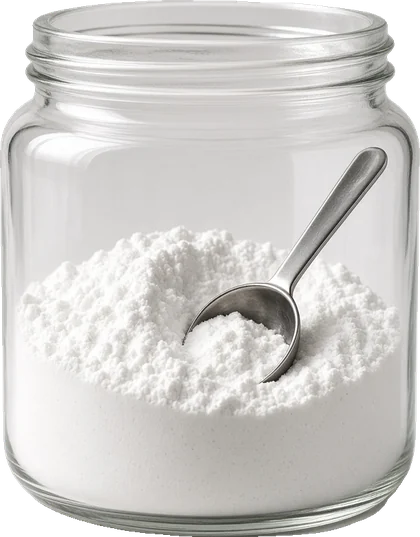
- Tap the baking soda jar to add a spoonful to the flask.
- Drag the vinegar over the flask and hold to pour. Drag down to pour faster.
- Watch it fizz! The bubbles are carbon dioxide gas.
⚠ Safety
Safe kitchen experiment. Wear goggles so no splash gets in your eyes, and do not drink the mixture.
⭐ Fun fact: Bakers use the same gas: baking soda makes cakes rise.